UEMA debate sustentabilidade e o futuro do ensino superior no Encontro de Reitores da SDSN
Por ODS UEMA em 28 de outubro de 2026
UEMA discusses sustainability and the future of higher education at the SDSN University Presidents Meeting
A Universidade Estadual do Maranhão (UEMA) consolidou mais uma importante inserção no cenário internacional ao participar do Encontro de Reitores de Universidades (University Presidents Meeting), promovido pela Rede de Soluções para o Desenvolvimento Sustentável das Nações Unidas (SDSN). O evento global reuniu virtualmente reitores, presidentes de instituições de ensino e lideranças acadêmicas de diversos continentes para debater o papel estratégico das universidades no avanço dos Objetivos de Desenvolvimento Sustentável (ODS) e nas transformações do ensino superior.

Com debates centrados em eixos vitais para o fortalecimento da gestão universitária, o encontro abordou temas como a interface entre a ciência e a formulação de políticas públicas, o uso ético e inovador da Inteligência Artificial no ensino e a constante evolução dos currículos acadêmicos. Durante as discussões, a UEMA evidenciou como a gestão universitária pública pode conectar diretrizes globais da Organização das Nações Unidas (ONU) às demandas socioambientais e territoriais do Maranhão.
Em seu pronunciamento, a UEMA enfatizou que o compromisso da instituição com a Agenda 2030, estruturado de forma contínua desde 2021, transformou a dinâmica de pesquisa, ensino e extensão em seus 20 campi. A universidade ressaltou que a criação de editais com recursos próprios, a capacitação da comunidade acadêmica e a reestruturação da gestão permitiram que a UEMA passasse a dialogar diretamente com grandes organismos internacionais, como a UNAI, o UNICEF, o PNUD e a própria SDSN, sem perder de vista a transformação social do Estado.
A relevância da universidade pública para o avanço desse compromisso foi destacada pelo reitor Walter Canales durante sua fala na conferência.
“Desde 2021, decidimos conectar cada pesquisa, cada aula e cada projeto de extensão à Agenda 2030. Ajustamos a nossa gestão, abrimos edital com recursos próprios, treinamos a nossa comunidade acadêmica e levamos a sustentabilidade para a prática. Não estamos apenas respondendo aos desafios do presente; estamos preparando o Maranhão para o futuro”, pontuou o reitor.

Dando seguimento ao alinhamento estratégico, a instituição evidenciou ações pioneiras que colocam a UEMA em posição de referência em inclusão e inovação. Receberam destaque o Programa de Formação Docente para a Diversidade Étnica (PROETNOS), voltado para a qualificação de populações indígenas, quilombolas, quebradeiras de coco e comunidades tradicionais; o Programa de Formação Superior para Pessoas Privadas de Liberdade (ProPPL) no curso de Serviço Social; as iniciativas do Núcleo de Acessibilidade da UEMA (NAU) e a criação do inédito Bacharelado em Inteligência Artificial, unindo tecnologia, ciência e responsabilidade social.
A Rede de Soluções para o Desenvolvimento Sustentável (SDSN) atua sob os auspícios da ONU para mobilizar o conhecimento científico e técnico global na promoção de soluções práticas para o desenvolvimento sustentável. Os Encontros de Reitores conectam lideranças acadêmicas de todo o mundo para alinhar a atuação das universidades com compromissos globais de preservação ambiental, inovação, inclusão social e cooperação internacional.
Com o suporte de redes nacionais e regionais espalhadas por diversos continentes, incluindo a SDSN Brasil, a organização articula instituições de ensino e centros de pesquisa em um esforço colaborativo. Essa sinergia fortalece a produção científica em economias emergentes, capacita futuros líderes por meio de metodologias voltadas para os ODS e fomenta parcerias estratégicas entre governos, setor privado e a comunidade acadêmica para responder aos desafios socioambientais mais urgentes do nosso tempo.
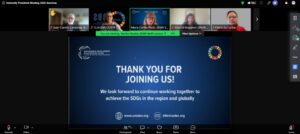
The State University of Maranhão (UEMA) has further solidified its presence on the international stage by participating in the University Presidents Meeting, organized by the United Nations Sustainable Development Solutions Network (SDSN). This global event brought together university rectors, institutional presidents, and academic leaders from across several continents to debate the strategic role of universities in advancing the Sustainable Development Goals (SDGs) and driving the transformation of higher education.
Focusing on key areas essential for strengthening university management, the meeting addressed topics such as the interface between science and public policy formulation, the ethical and innovative use of artificial intelligence in education, and the continuous evolution of academic curricula. Throughout the discussions, UEMA demonstrated how public university management can bridge global United Nations (UN) guidelines with the specific socio-environmental and territorial needs of the state of Maranhão.
In its statement, UEMA emphasized that the institution’s commitment to the 2030 Agenda, a sustained effort since 2021, has transformed the dynamics of research, teaching, and outreach across its 20 campuses. The university noted that the creation of internal funding calls, the professional development of the academic community, and the restructuring of its management have enabled UEMA to engage directly with major international organizations such as UNAI, UNICEF, UNDP, and the SDSN itself, all while remaining focused on fostering social transformation within the state.
The relevance of the public university in advancing this commitment was highlighted by Rector Walter Canales during his address at the conference.
“Since 2021, we have made the decision to link every research project, every class, and every outreach initiative to the 2030 Agenda. We have adjusted our management, launched calls for proposals using our own resources, provided training to our academic community, and put sustainability into practice. We are not merely responding to the challenges of the present; we are preparing Maranhão for the future,” the rector noted.
Continuing this strategic alignment, the institution showcased pioneering initiatives that have established UEMA as a benchmark for inclusion and innovation. Notable examples include the Faculty Training Program for Ethnic Diversity (PROETNOS), which focuses on the professional qualification of Indigenous peoples, quilombolas (members of Afro-Brazilian maroon communities), agroextractivists (such as babassu coconut breakers), and other traditional communities; the Higher Education Program for Individuals Deprived of Liberty (ProPPL), specifically within the Social Work degree program; the initiatives of UEMA’s Accessibility Center (NAU); and the creation of a unique Bachelor’s degree in Artificial Intelligence, which integrates technology, science, and social responsibility.
The Sustainable Development Solutions Network (SDSN) operates under the auspices of the UN to mobilize global scientific and technical knowledge in the promotion of practical solutions for sustainable development. Its “Rector Gatherings” connect academic leaders from around the world to align university activities with global commitments regarding environmental preservation, innovation, social inclusion, and international cooperation.
Supported by national and regional networks across several continents—including SDSN Brazil—the organization brings together educational institutions and research centers in a collaborative effort. This synergy strengthens scientific production in emerging economies, empowers future leaders through methodologies focused on the SDGs, and fosters strategic partnerships among governments, the private sector, and the academic community to address the most pressing socio-environmental challenges of our time.
Por: Assessoria ODS/UEMA


